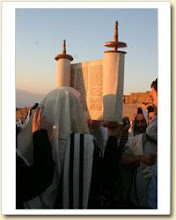
Chanukah additions:
(Below is from Sara Nasirov & me)
1) “Al HaNisim” - Shemoneh Esrei & Bentching .
In Shmoneh Esrei, if forgot and did not yet say H-shem HaTov, can say it then and then continue from V'Chol HaChayim.
If already said H-shem HaTov, do NOT need to repeat (Siddur Kol Yaakov HaShalem). In bentching (acc. to what I learned w/ Rabbi Heber in Maalot), since no obligation of feast for Chanukah, do NOT NEED to repeat bentching.. HOWEVER, if remember before saying Baruch Ata H-shem of next blessing, say Al HaNissim and continue from there. If already sd Baruch Ata H-shem continue bentching and right before HaRachaman Hu Yizakeinu, insert HaRachaman Hu Ya'aseh Lanu Nissim v'nifla'ot ka'asher Asa l'Avoteinu bayamim hahem bazman hazeh then finish bentching (Siddur Kol Yaakov the complete artscroll siddur)
ps- i believe the laws above are same for ashkenaz and sefardim
2)FULL Hallel (*Sefardi women say it without a bracha )
3)After Shir Shel Yom:Tehillim-Perek Lamed:"Mizmor Shir Chanukat HaBayit l'David”
*NO TACHANUN AND SO NO VIDUY ALSO...
*OMIT LAMNATZECH AFTER 2ND ASHREI IN SHACHARIT
Here is a list of tehillim to say while the menorah is burning:
90 (tsaddi),30 (lamed) ,33 (lamed gimmel) ,67 (samech zayin),19 (yud tes),100 (Kuf),133 (kuf lamed gimmel)
Remember it is a special zechus to gaze into the lights of the menorah
Divrei Chizuk e-mail said a beautiful thing for Chanukah :
"Remember Chanukah is a time of Nissim. Look for them, and be mispallel to Hashem to show them to you ."
( *** By the way you can get the divrei chizuk e-mails daily by e-mailing them at : info@divreichizuk.com )
Tuesday, November 30, 2010


Chanukah additions:
(Below is from Sara Nasirov & me)
1) “Al HaNisim” - Shemoneh Esrei & Bentching .
In Shmoneh Esrei, if forgot and did not yet say H-shem HaTov, can say it then and then continue from V'Chol HaChayim.
If already said H-shem HaTov, do NOT need to repeat (Siddur Kol Yaakov HaShalem). In bentching (acc. to what I learned w/ Rabbi Heber in Maalot), since no obligation of feast for Chanukah, do NOT NEED to repeat bentching.. HOWEVER, if remember before saying Baruch Ata H-shem of next blessing, say Al HaNissim and continue from there. If already sd Baruch Ata H-shem continue bentching and right before HaRachaman Hu Yizakeinu, insert HaRachaman Hu Ya'aseh Lanu Nissim v'nifla'ot ka'asher Asa l'Avoteinu bayamim hahem bazman hazeh then finish bentching (Siddur Kol Yaakov the complete artscroll siddur)
ps- i believe the laws above are same for ashkenaz and sefardim
2)FULL Hallel (*Sefardi women say it without a bracha )
3)After Shir Shel Yom:Tehillim-Perek Lamed:"Mizmor Shir Chanukat HaBayit l'David”
*NO TACHANUN AND SO NO VIDUY ALSO...
*OMIT LAMNATZECH AFTER 2ND ASHREI IN SHACHARIT
Here is a list of tehillim to say while the menorah is burning:
90 (tsaddi),30 (lamed) ,33 (lamed gimmel) ,67 (samech zayin),19 (yud tes),100 (Kuf),133 (kuf lamed gimmel)
Remember it is a special zechus to gaze into the lights of the menorah
Divrei Chizuk e-mail said a beautiful thing for Chanukah :
"Remember Chanukah is a time of Nissim. Look for them, and be mispallel to Hashem to show them to you ."
( *** By the way you can get the divrei chizuk e-mails daily by e-mailing them at : info@divreichizuk.com )
cakes4cause
Sunday, November 28, 2010
Rav Pincus- Shabbos Kadosh
Thursday, November 25, 2010
Wednesday, November 24, 2010
Tuesday, November 23, 2010
Mi Kiamcha Yisrael!
I was examining an 8 year old kid. He looked like a regular kid wearing a T-shirt and shorts. I was in the middle of doing his vision evaluation and in the distance I could hear the siren of an ambulance, as I do from time to time.
The 8 year old boy asked me if I could stop the exam. I thought that he wanted to go to the bathroom. But what he did instead was to recite Psalm121 (Essa Einai - I lift my eyes) by heart in Hebrew to pray for the well-being of whoever it was in that ambulance. When he finished, he let me carry on.
Monday, November 22, 2010
Sunday, November 21, 2010
Thanks so much!
Wednesday, November 17, 2010
Rav Raz Hartman
NYU's Bronfman Center 7 East 10th Street.
Sunday Nov 21 730 p.m.
This was taken from Mevakesh Lev---something interesting thank you Rav Ehrman!!!
Overeating
Question: I eat without end although I am not hungry. I tried a diet and it didn’t help, because I eat obsessively. I want to stop but I don’t succeed, and my weight increases from day to day.
Answer: You’re not alone. It’s a pervasive plague. There are a billion people on earth who weigh too much (by the way, a similar number of people are undernourished, and each day 25,000 die of hunger). 350 million overeaters are classed as having an eating disorder. Money spent on abnormal overeating in the U.S. each day equals 250 million dollars. Daily expenditures in the U.S. on various weight-lowering programs equal 110 million dollars. Overeating really is a plague. In Israel, 39% of people are overweight. Of these, 60% are adults, 20% are boys and 19% are girls.Obesity can cause heart problems and many other illnesses, and the reason is simple: The body is taking in more calories than it is burning off. The cure is thus simple: Don’t eat fattening foods. Don’t eat sweet foods like chocolate, cake or sweets, or fatty milk products. Break out of the cycle of overeating: Taking in calories creates a need. It’s not real hungerbut artificial hunger.
And what is the ultimate cause of that uncontrollable desire to eat? There are various causes: psychological factors, loneliness, sadness, or depression, as well as hormonal irregularities and imprecise functioning of the brain, indicating, only after a delay, that a person is already sated, thus leaving an inaccurate feeling of hunger. In any event, the solution is not crash diets that require strong discipline and a great effort, but which generally fail. Rather, a different approach is needed.
Various Strategies
1. Eat a good breakfast, which our sages called “Pat Shacharit” -- one’s “morning bread”.
2. Eat a meal once every three hours, so that one will not be hungry and will not attack the food. Such was the custom of Jews from Germany, and it is linked to their custom of waiting three hours between meat and milk. Then, that three-hour habit will become second nature.
3. Prepare yourself something healthy in your bag in case you feel hungry during the day, like a piece of fruit, a vegetable, or a healthy cracker.
4. Prepare yourself healthy, tasty food at home with which to start your meal, like salad or vegetable soup.
5. Avoid fast food. Usually it’s not healthy
.6. Don’t drink sweet drinks.
7. If you slip, make amends quickly. Keep matters in hand. If someone makes a mistake and suffers for it, should he then make the same mistake and suffer more?
8. If there is healthy food on the table, wait ten minutes before eating so as overcome the strong desire to eat it. It’s like the Chinese saying: Who is brave? He who eats one peanut.” Rabbenu Yona of Gerundi wrote in his book, “Yesod HaTeshuva” in the name of Ra’avad, that in serving G-d one should harness one’s resolve and forego one delicious food every meal. I only said that one should wait.
9. Don’t store unhealthy food at home. We don’t house terrorists.
10. Sometimes a person thinks he is hungry when he is really only thirsty. Watch out for that.
11. Eat enough food to satisfy yourself and wait twenty minutes. That’s how long it takes for the brain to relay the message that you’re satisfied. It’s the time it takes to walk a kilometer.
12. Do a half hour of physical exercise each day. That, too, will take off a bit of weight, butthe main thing is that it’s very healthy.
13. Before participating in a large banquet, decide precisely what you are going to eat. It’slike the instructions a soldier receives before battle.
14. Enlist family support and the supervision of another human being.
Deriving Blessing from Eating Less
Here’s a rule of thumb. The Torah says, “Eat your fill” (Vayikra 25:19), and Rashi comments, quoting Torat Kohanim, that this refers to “eating little and finding blessing in it.” Eat daintily. “One shouldn’t eat voraciously, but the way one eats before a king, for a blessing only rests on one who does not eat voraciously… as when Esau said, ‘Pour that red, red stuff down my throat’ (Bereshit 25:30). Just as the ministering angels eat in holiness and purity, so should Israel” (Torat Kohanim 25).
Turn to Overeaters Anonymous
If all the above advice doesn’t help, turn to Overeaters Anonymous (O.A.). O.A. was founded 50 years ago (5720) to help people with an obsessive, uncontrollable urge to eat, by way of a twelve-stage program. (The same that was used by Alcoholics Anonymous, but with several differences). It includes a personalized program, and treats the various causes of overeating, such as emotional disappointment. They take no medical steps (In case of need, go to a dietician), but work on the person to change himself internally.
Tuesday, November 16, 2010
TONIGHT!!
729 W. 186th St.
Tell your friends- and then please RSVP!
Even the Smallest of Actions..
by Rabbanith Ruth Menashe
In what merit did Miriam deserve to be the one to provide water for the entire Jewish people?
Miriam, a six year old girl, impressed upon Amram, her father, the importance of remarrying his wife Yochebed, from whom he separated. The decision to separate was in response to Pharaoh's decree to kill all the Jewish baby boys. Why remain married under such devastating circumstances? Miriam claimed that this act made her parents worse than Pharaoh, for as a result of this decision no girls could be brought into this world.
Amram, a leader of the Jewish people, followed his daughter's advice. When the baby boy Moshe was born and had to be hidden from Pharaoh's officers, he was a placed in a basket on the Nile river. And who was the one who watched over him? His loving sister, Miriam.
There is an opinion, that because of this kind act connected with water, Miriam merited to provide the Children of Israel with water in the desert. When she passed away, (on the 10th of Nissan, according to some opinions) as mentioned in this week's Parasha, the well stopped giving water. As it says, "And Miriam died there... and there was no water for the congregation".
My dear friends, every single one of our actions is recorded -- an act of kindness never goes unnoticed. A small step of growth results in extreme joy in Heaven.
Monday, November 15, 2010


 In the suburbs of Jersey, Yitzy was a typical boy. He loved the Mets, model airplanes and playing sports. Despite a stout physique, he was the fastest runner in his class. He had a thick, unruly mop of dark, wavy hair, and an irresistible smile that charmed him out of many a mishap. Life was good.
 Yitzy’s treatment, meanwhile, was anything but clear; an allograft (donor bone), more surgeries, more infections, pins, rods. He felt like a puppet. The doctor gave the now 13 year old three choices: insert another allograft from the knee down, leaving his entire leg straight forever; replace his knee and bone with a metal knee and rod, which would leave him at a high risk of infection and require more surgeries to replace the implants as he grew (and which could easily crack, severely limiting any normal boy-action); or amputation from above the knee down. Yitzy’s parents left the decision up to him.
 As an adolescent, Yitzy had to begin the arduous process of learning to walk anew, and even how to fall “right,” so he wouldn’t hurt himself. Through it all, he found ways to amuse himself and others. At Chai Lifeline’s Camp Simcha, a free two-week camp-extravaganza in the Catskills for kids with cancer, the mischievous Yitzy loved putting one over on his bunkmates. “I would say, ‘Whoever can put one foot on the floor and one foot on the ceiling at the same time is the head of the bunk,’” he recalls. “They’d all try it and fall over, and then I’d take off my prosthesis and touch the ceiling. I still use that one.”
 “I think all of us, if we look hard enough, can see the good in what happens to us,” says Yitzy, his ever-present smile momentarily fading. “I didn’t love throwing up, or the surgeries, or losing my leg — but if I had to do it all again to guarantee I’d be where I am now, I would do it. It’s not that I consciously think ‘I had cancer so now I’m going to appreciate life,’ but that is what I’ve internalized. I never asked ‘why me.’ It just was me, so now deal with it.
 |
|
Here are two more small signs that the Redemption is happening, and even speeding up a little. G-d wants Jewish babies. That’s part of the plan. And He wants, at least some of them, here in the Old City. How do I know?
|


Thursday, November 11, 2010
Vayeitze: Yaakov's Dream
HARMONIZING HOUSEHOLD HARMONY – VAYETZEI
Shira Smiles Shiur – November 7, 2010/Cheshvan 30, 5771
Summary by Channie Koplowitz Stein
After many years of childlessness, Rochel Imenu is finally blessed with a child. In naming this precious child Yoseph, she combines two separate reasons into the meaning of the name: First, Hashem has gathered together and removed (oSaF) my disgrace, and secondly, may He add (YoSiF) for me another son.
Rashi cites an interesting Medrash to explain how a child can remove the disgrace of his mother. We know that in any home, things will go wrong and things will break. When the husband asks, “Who broke this dish,” or, “Who ate these figs,” the wife can now deflect blame from herself by pointing to the little angel.
This Medrash requires clarification, for it seems to trivialize the great gift Hashem gave Rochel Imenu with the birth of this son. However, the Sichot Mussar offers a very simple and gratifying interpretation. He explains that “removing the disgrace” from the wife has a much deeper significance, for the ultimate aim in a marriage is to create and maintain shalom bayis, tranquility in the home. If Hashem Himself decided to bend the truth to maintain this tranquility between husband and wife, as He had changed Sara’s words to reflect her own old age rather than her husband’s, so too is it permissible to bend the truth and blame the child for minor offenses to maintain shalom bayis. The compilation of Zekanim Esbonan goes one step further and focuses on the sensitivity of our Matriarch and Patriarchs to the absolute tone present in the home, much as a master conductor can hear any slight discord in the play of any instrument. By deflecting blame for such minor infractions, the household harmony is maintained, a harmony that is necessary to raise children who will then be able to create proper homes of their own.
To emphasize this point, the Zekanim present a vivid analogy. If you build a bar n for your cow and there is a crack in the wall, he says, you are not overly concerned and do not rush to patch it up. But if that crack is in the wall or the ceiling of your baby’s room, perhaps endangering his health, you do not permit the status quo to exist but rush to fix it. When a husband and wife allow even trivial problems like this to enter their bayis, they are creating cracks in the walls that protect their family. When they compromise and tacitly allow the child to “take the blame”, they are ensuring the continued loving relationship that must exist between a husband and wife.
Rabbi Frand illustrates the importance of compromise and giving in a marriage by citing the Halacha in the placement of the mezuzahin one’s home. Rashi and Tosefos disagree on whether the mezuzah should be placed horizontally or vertically upon the doorpost. Since one is about to enter the home, the mezuzah itself is offering an example of compromise between two differing viewpoints so that peace can be maintained as one crosses the threshold even before entering the home. It is placed at an angle, reflecting both points of view.
There is another dimension to Rochel’s words, as Rabbi Schlenzinger, in Eleh Hadevarim points out. Certainly Rochel Imenu was cognizant of the great chessed Hashem did for her in giving her this son. As the Ksav Sofer points out, she knew how great he would be, that he be grow up to be Yoseph Hatzadik and be the savior of his family in Egypt. But she also recognized the smaller chasadim that came with this gift, her removal as the sole possible cause of every household mishap. For the small favors that helped maintain shalom bayis as well as for the large miracles she thanked Hashem. It is through acknowledging the small gifts, the minor accommodations, that we build our relationship and cleave to Hakodosh Boruch Hu.
We know that our purpose on this earth is to build our relationship with Hakodosh Boruch Hu until we reach the world of truth. Our sages have called this world in which we live the prozdor, the entranceway to that world. Rabbi Pincus in Tiferes Shimshon clarifies what our thought process should be. He posits that we should not think of this world as a factory, full of difficult things we must do and accomplish before we can head home to relax and enjoy the fruit of our labor. Rather, he suggests, we should think of this world as the wedding canopy, the chupah, which we enter into with anticipation and reverence, with the love and resolve that will enable us to build our future relationship with our spouse.
With this thought in mind, we realize that each difficulty, each challenge, strengthens our relationship and builds our faith in each other. Within each challenge there may in fact be the very seed of blessing, unaware of it as we may be. Rabbi Spiro records and incident where a crippled Jew masquerading as a Polish beggar threw tomatoes and other produce in mock derision at Jews being rounded up for transport during the holocaust. These tomatoes were in fact life giving food. So too it is possible that the difficulties we perceive are actually the very means of our salvation. Leah Imenu understood this when she named her fourth son Yehudah to show her gratitude to Hashem for both the good she had received and the perceived slight of being less loved. She realized that Hashem was repaying her pain with the joy of additional children.
So too did Rochel Imenu recognize that her pain at being childless while she saw her sister bearing child after child was the catalyst for Hashem’s gathering (oSaF) those tears and that feeling of shame and inadequacy and replacing them with such a very special child.
All the difficulties and travails our Matriarchs and Patriarchs faced, and indeed all those we face ourselves, are manifestations of Hashem’s love for us. Rabbi Feuer in Tehillim Treasury, points out that Hashem’s presence is most often manifested to the Jewish people in biblical times through a cloud. He explains the symbolism of the cloud appearing dark but in actuality bearing the life sustaining rain. As the clouds appear in our lives, we must attempt to thank Hashem for these as well, even if we cannot see the coming blessing through the dark clouds. Our gratitude must include the small things as well as the great things, the difficulties and challenges as well as the obvious blessings.
Maayan Beis Hashoeva explores a Kabalistic interpretation of Rochel Imenu’s relief at having her disgrace removed. Maayan Beis Hashoeva goes back to the time of creation and to Chava’s sin of eating from the tree of knowledge. Her sin brought death to the world, but her expiation and repair of the sin would come through her painfully bearing and rearing children. Some of our Sages claim that the tree of knowledge was a fig tree. When her husband asks, “Who broke that perfect vessel that Hashem created,” and “Who ate the figs,” she can now reply that she is repairing that breach with the birth of her son, something she feared she would not have the opportunity to do.
Related to this idea, perhaps, is the breaking of the glass under the chupah, as explained by the Rozhiner Rebbe and cited on Aish.com. The Talmud states that the Holy Presence resides between a man and a woman in a holy state. Iish, man, contains the yud of Hashem’s name, while Ishah contains the heh at the end. We have here two of the four letters of God’s holy Name. When they get married under the chUpaH and we break the pach, the small vessel, we are left with the last two letters of the holy Name, the vov and the second heh, and God’s four lettered Name is now united in building a proper home, a microcosmic reflection of the perfect home of Eden.
Like Rochel Imenu, we should merit to build our homes and all our relationships to reflect peace and tranquility, to look for the good in every situation while understanding that truth is often hidden behind clouds. We build our relationships, both with Hashem and with our fellow man, by being grateful for all the little things as well as the big blessi